
Microsoft Dynamics 365 generates large volumes of operational data across finance, sales, supply chain and customer engagement systems. However, many organisations struggle to convert this raw data into meaningful insights. With the introduction of Microsoft Fabric, businesses can now unify analytics, data engineering and artificial intelligence within a single cloud platform to unlock deeper value from their Dynamics 365 data.
Microsoft Fabric provides an integrated analytics environment that allows organisations to collect, process and analyse data from multiple enterprise systems. When integrated with Dynamics 365, it creates a powerful ecosystem for real-time analytics, advanced reporting and data-driven decision making.
Understanding Microsoft Fabric and Its Role in Modern Data Platforms
Microsoft Fabric is a unified data platform that combines several powerful capabilities including data engineering, data science, real-time analytics and business intelligence. It brings together services that traditionally existed as separate tools into a single integrated environment.
This unified approach simplifies enterprise data architecture and allows organisations to manage data pipelines, analytics models and reporting dashboards more efficiently. By connecting Dynamics 365 with Microsoft Fabric, businesses can centralise their operational data and transform it into actionable insights.
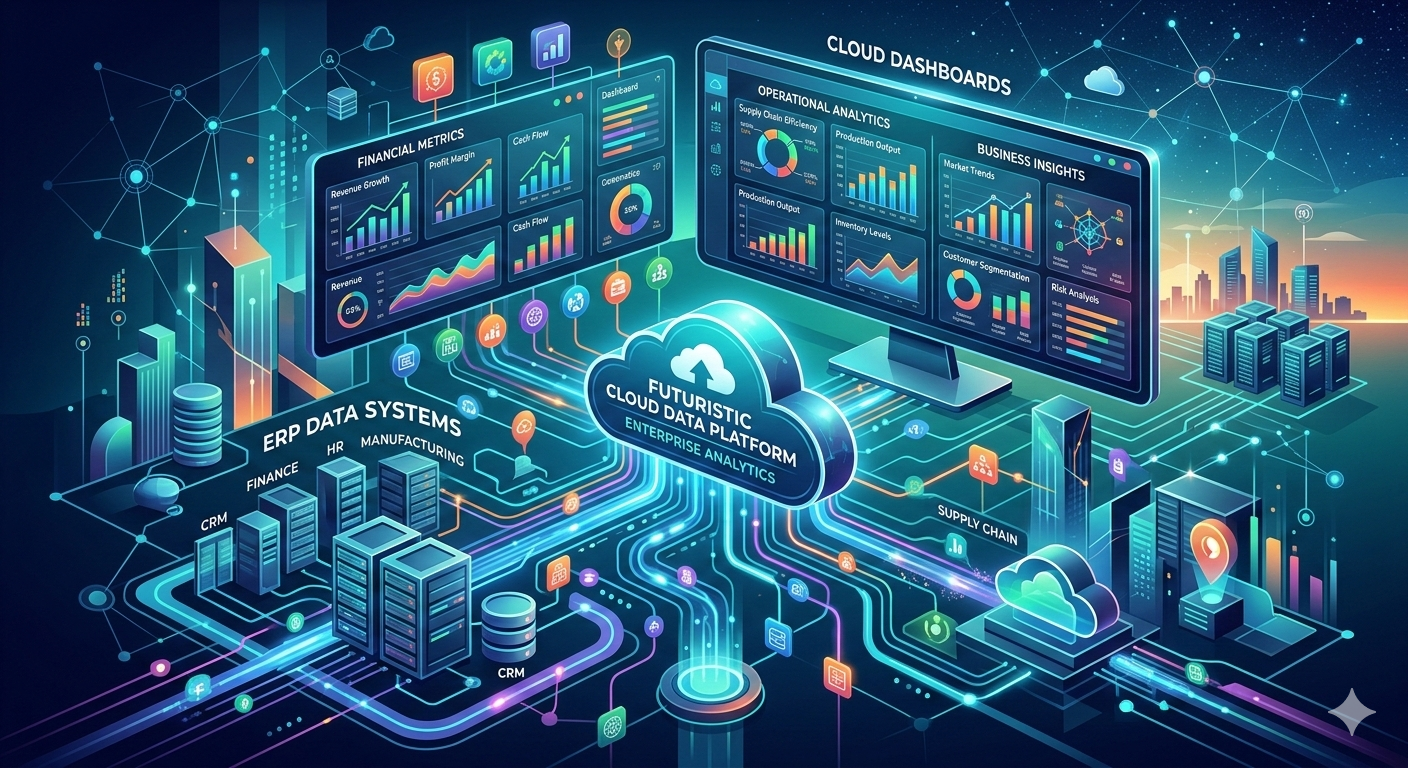
Dynamics 365 applications continuously generate valuable business data across departments such as finance, operations, sales and customer service. Without a modern analytics platform, organisations often struggle to analyse this data efficiently.
Microsoft Fabric bridges this gap by providing a scalable cloud platform that enables real-time data processing, advanced analytics and seamless integration with Power BI dashboards.
By integrating Dynamics 365 data with Microsoft Fabric, organisations gain the ability to analyse operational trends, monitor financial performance and optimise business processes using unified datasets. This approach enables business leaders to make faster and more informed decisions.
Fabric also enables advanced data engineering capabilities that allow organisations to build automated data pipelines. These pipelines collect and process data from Dynamics 365 and other enterprise systems, ensuring that analytics models and dashboards always reflect the most up-to-date information.
Modern organisations need unified data platforms that transform operational data into actionable insights across every department.
Enterprise Data Strategy Insight
Another key advantage of Microsoft Fabric is its seamless integration with Power BI. Businesses can create powerful dashboards and visualisations directly from Fabric datasets, enabling executives and operational teams to access insights in real time.
When combined with artificial intelligence and machine learning capabilities within the Microsoft ecosystem, organisations can also build predictive analytics models that forecast demand, identify operational risks and uncover new growth opportunities.
Unlocking the Full Value of Dynamics 365 Data
The integration of Dynamics 365 with Microsoft Fabric represents a significant shift in how organisations manage enterprise analytics. Instead of relying on fragmented data systems, businesses can now operate on a unified platform that supports real-time insights, advanced analytics and AI-driven decision making.
As organisations continue to embrace digital transformation, the ability to harness enterprise data effectively becomes increasingly important. By leveraging Microsoft Fabric alongside Dynamics 365, businesses can build a modern cloud data platform that drives operational efficiency, improves decision making and supports long-term innovation.